Central America & Caribbean 10~26
Terrains of Resistance: Sculptural Topographies and Spatial Inquiries Across Mexico and the Caribbean Basin
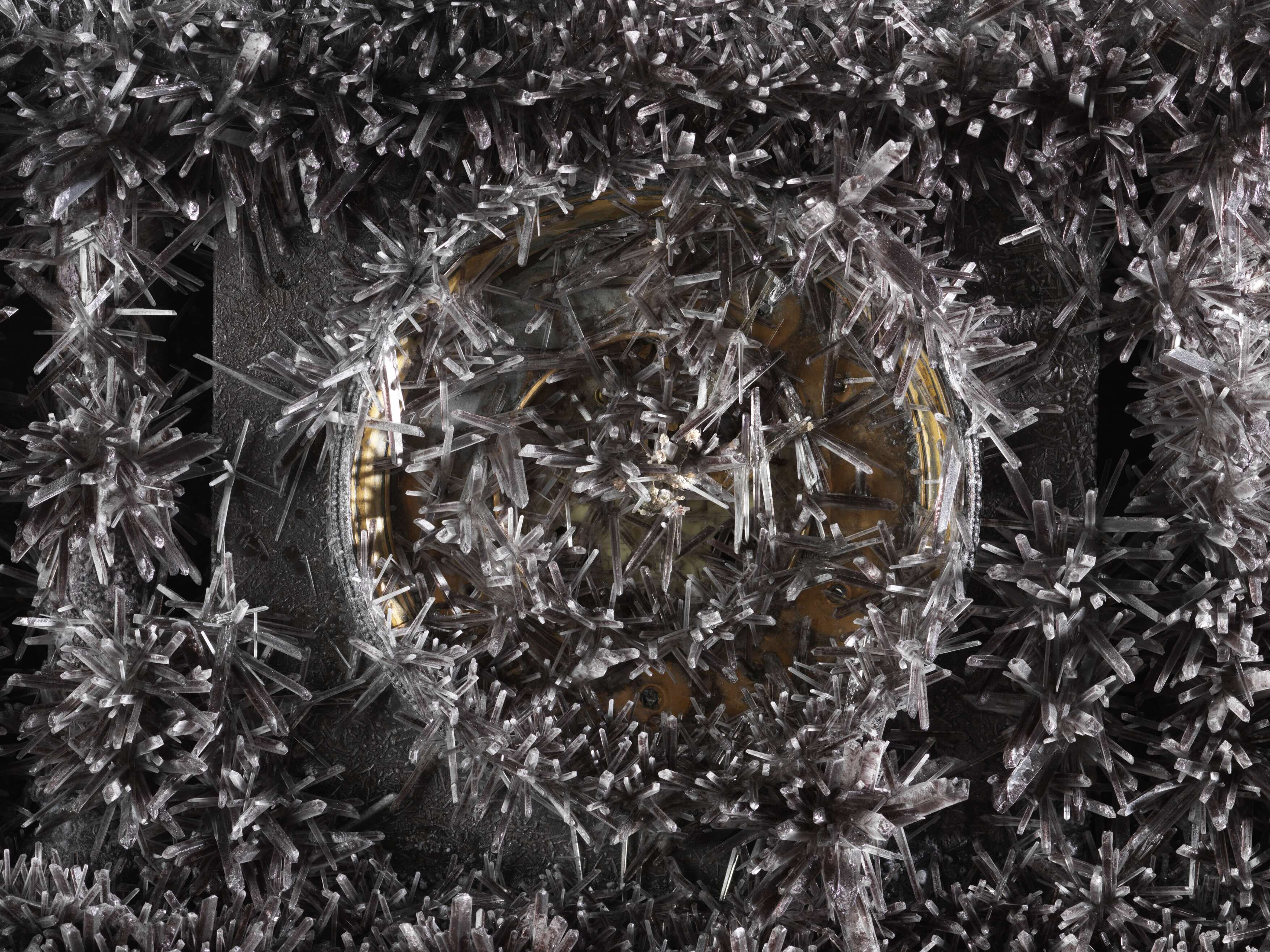
Across the Caribbean, Central America, and Mexico, contemporary sculptural and three-dimensional spatial practices are undergoing a profound conceptual resurgence. Rather than treating space as an inert container, contemporary artists in these regions mobilize physical matter—from organic fibres and volcanic stone to architectural armatures and sonic structures—to interrogate postcolonial histories, environmental extraction, and the spectral memories embedded in living landscapes. Rather than retreating into two-dimensional pictorial representation, recent exhibitions across the region physically engage audiences through monumental installations, site-responsive interventions, and material assemblages that demand embodied confrontation.
Ecological Assemblage and Corporeal Terrains: Silhouettes in the Undergrowth at Museo Jumex
At Museo Jumex in Mexico City, Silhouettes in the Undergrowth gathers a multigenerational dialogue of Latin American and Caribbean artists whose work inhabits physical space as an act of resistance. Drawing initial conceptual cues from Ana Mendieta’s earth-body sculptures, the exhibition expands outwards into complex, three-dimensional spatial encounters. Sculptor Vivian Caccuri constructs tactile and acoustic sculptural environments that investigate the transmission of sound, bodily vulnerability, and tropical humidity, while Minia Biabiany contributes delicate spatial structures made of woven indigenous fibres that trace historical trauma across the Guadeloupe archipelago. These sculptural installations transform the institutional architecture into an immersive, living understory, blurring the line between physical sanctuary and ecological precarity.
Woven Resistances and Tactile Archives: It Comes from the Head at the National Art Gallery of The Bahamas
In Nassau, the National Art Gallery of The Bahamas unveiled It comes from the head: A Straw Heritage, curated by Simone Cambridge. The exhibition radically repositions straw plaiting—traditionally relegated to the domestic craft economy or tourist souvenir markets—as a vital medium for monumental contemporary sculpture and spatial critique. Artists including Anina Major and Averia Wright present sculptural assemblages that fuse woven palm fronds, raw clay, found woodwork, and suspended armatures. Major’s woven ceramic vessels and Wright’s physical assemblages like The Last Button on Abraham’s Coat translate generations of maternal labour and Afro-Bahamian ancestral resilience into tactile spatial monuments, proving that physical materials carry the weight of socio-political survival.
Spectral Assemblies and Parliaments of the Unseen: Gabriel Rodríguez Pellecer at MAC Panamá
In the subterranean chamber of La Bóveda at the Museo de Arte Contemporáneo de Panamá, Guatemalan artist Gabriel Rodríguez Pellecer inaugurates Parlamento Trans-histórico de Entidades Vivas y Muertas en Centroamérica y Panamá. The installation unfolds as a sculptural council room wherein hand-carved furniture, symbolic effigies, and spatial relics stand as conduits between historical figures and the spirit realm. By creating an uncanny assembly space for bodies both absent and present, Rodríguez Pellecer subverts traditional political architecture, offering instead a three-dimensional ritual arena where Central American collective trauma, state violence, and speculative futures converse in silence.
The Living Ecosystem as Spatial Monument: Oscar Murillo at Museo Tamayo
Transforming the brutalist concrete galleries of Mexico City's Museo Tamayo, Colombian artist Oscar Murillo introduces Spirits in the Swamp. Murillo breaks entirely beyond conventional boundaries to construct an overwhelming spatial and sculptural environment. Suspended industrial fabrics, layered earthen mounds, detritus, and tactile black canvasses envelop the gallery, staging a living swamp that reacts directly to visitor footfall and Chapultepec Park’s interior climate. By confronting the geometric solidity of the museum with mutable, degrading organic matter, Murillo’s spatial installation acts as a physical metaphor for collective memory, labour, and environmental decay.
Structural Hybridity and Nomadic Forms: Not Vital at Galerie Nordenhake
Venturing into the relationship between domesticity, architecture, and mass, Swiss-born artist Not Vital presents Contemplaciones at Galerie Nordenhake in Mexico City. Known for monumental architectural sculptures around the globe, Vital brings a sequence of works that investigate the tension between organic topographies and industrial materiality. Foremost among the show’s three-dimensional investigations are his hybrid "Scrach" works—sculptures constructed from stretched spatial skins that deliberately collapse the boundaries between fine art sculpture and habitational shelter. Vital’s forms physically challenge the architectural contours of the gallery, inviting viewers to question the scale of human shelter within hostile environments.
Lived Dialectics and Spatial Disruption: emic/etic at TEOR/éTica
In San José, Costa Rica, the independent contemporary space TEOR/éTica opened emic/etic, an ambitious group exhibition spotlighting spatial interventions, mixed-media sculpture, and institutional inquiry. Featuring pioneering works by artists such as Moisés Barrios, Darío Escobar, Christian Salablanca, and the late Virginia Pérez-Ratton, the exhibition deconstructs how anthropological categorization is imposed on Central American realities. Escobar’s modified consumer goods turned metallic totems and Salablanca’s raw, mythopoetic sculptural objects interrogate the commodification of local resources and the lingering architectures of the banana and trade empires, using spatial friction to dislodge historical complacencies.
Through diverse materials—from salvaged raw timber and hand-plaited palms to unyielding stone, steel, and suspended industrial fabrics—these contemporary exhibitions demonstrate that sculptural practice in Central America, Mexico, and the Caribbean remains fundamentally inseparable from the politics of territory. By asserting three-dimensional presence, these artists reject passive viewing, demanding instead an active, physical renegotiation with history, ecology, and the built environment.