Canada 10~26
Material Geographies and Resonant Volumes: Contemporary Sculpture Across Canada
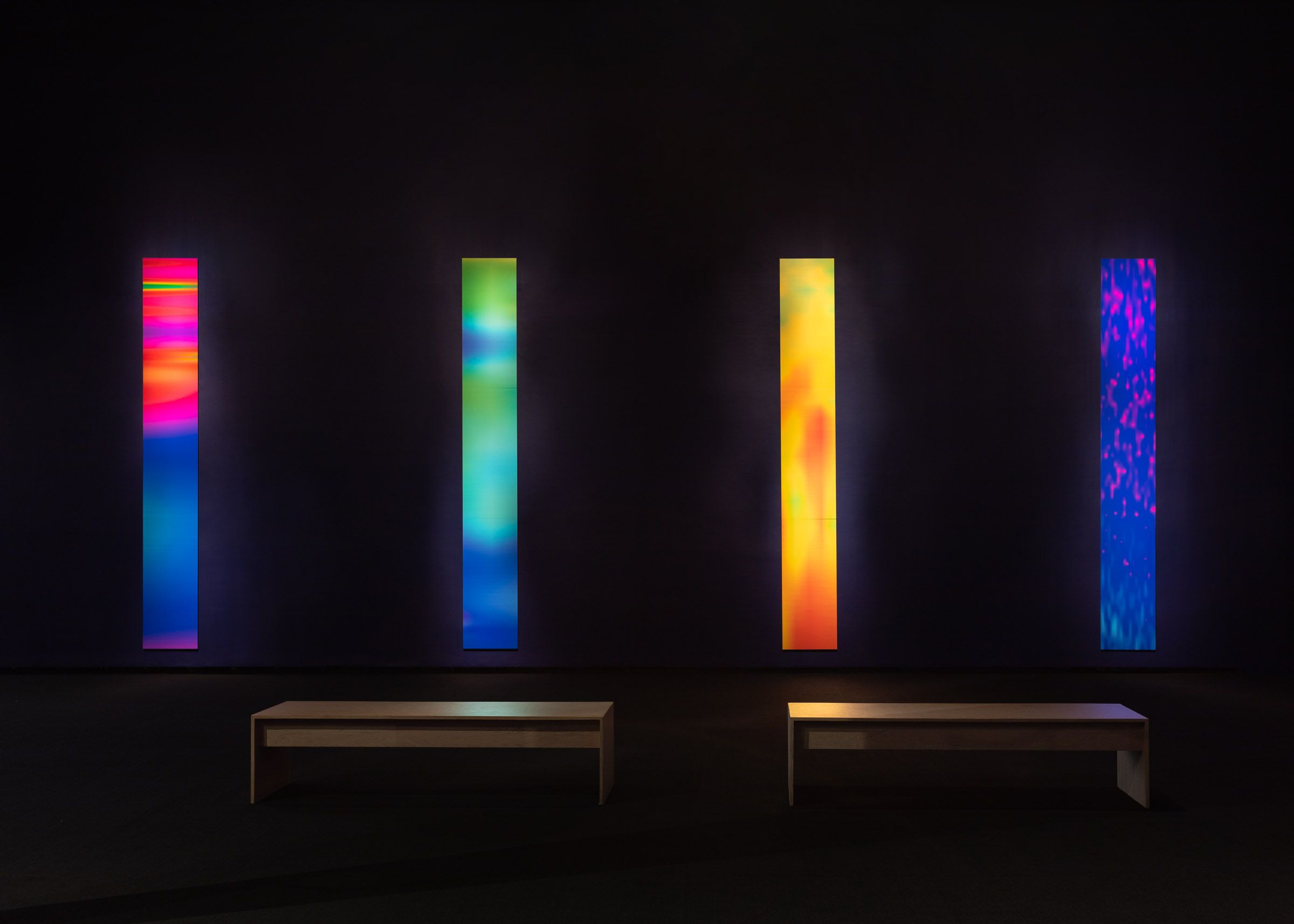
Contemporary three-dimensional art in Canada has witnessed a striking convergence of geographic memory, ecological urgency, and somatic resonance. Moving far beyond the static constraints of conventional plinths, current sculptural exhibitions across the country operate as immersive, spatial interventions. From the shores of Lake Ontario to the prairie horizons of Alberta and the cultural epicentres of Montreal, Canadian galleries are staging ambitious spatial encounters where raw mineral matters, architectural scaffolds, and kinetic bodies animate complex historical and environmental landscapes.
Submerged Topographies and Diasporic Sanctuaries in Toronto
At The Power Plant Contemporary Art Gallery in Toronto, the autumn program foregrounds architectural scale and aquatic depth through two monumental solo presentations. Jamaican-born multidisciplinary artist Charles Campbell presents How many colours has the sea, an ambitious co-commission with the Toronto Biennial of Art. Anchoring the gallery space is an expansive, suspended sculptural topography constructed from bathymetric data charting the underwater convergence of the African and North American tectonic plates. Flanked by hydrophone sound environments and monolithic breath portraits, Campbell transforms the architectural volume into an acoustic sanctuary honouring the lives lost during the Middle Passage, transmuting historical trauma into a meditative spatial encounter.
Running concurrently at The Power Plant Contemporary Art Gallery is Lap-See Lam’s Floating Sea Palace. Lam constructs a walk-through spatial installation built entirely from traditional Cantonese bamboo scaffolding. This architectural framework encloses a dreamlike narrative that channels the myth of Lo Ting—a legendary half-human, half-fish ancestor—alongside 3D scans and structural remnants of a 1990s floating dragon restaurant. By manipulating volume, aroma, and shadow inside a porous bamboo pavilion, Lam explores maritime displacement and generational migration in visceral physical dimensions.
Acoustic Spirals and Hybrid Forms in the Urban Fabric
Also unfolding within Toronto’s expanded biennial circuit, the Toronto Biennial of Art highlights site-specific spatial interventions that activate sensory perception. At the 32 Lisgar site, artist Maria Hupfield presents The Supernatural Powers of Fabulous Panther (Biimskojiwan). The sculptural installation consists of large-scale spirals executed in industrial grey felt, punctuated by silver jingle cones and tin elements. Evoking the Anishinaabe oral traditions surrounding miszhibizhiw—the formidable underwater creature associated with swirling currents—Hupfield’s spatial assemblage vibrates with tactile texture and percussive potential, translating indigenous cosmological knowledge into an enveloping material experience.
Westward at the Museum of Contemporary Art Toronto, the ground-floor galleries have been transformed by Michael Nicoll Yahgulanaas’s solo exhibition, Diaries After a Flood. Yahgulanaas, celebrated for originating the visual language of Haida manga, translates narrative dynamics into expansive spatial form. The exhibition features Flesh Tones, a pair of suspended kinetic sculptures that physically orbit the viewer, positioned alongside monumental curved wall sculptures fabricated from automobile hoods coated in luminous copper leaf. Recontextualizing symbols of resource extraction and industrial privilege into monumental spatial emblems, the artist interrogates the political fractures of contemporary ecology.
Mythological Bone and Animal Absurdity: Montreal to Calgary
In Montreal, the McCord Stewart Museum stages Inuit Universe, a masterwork survey dedicated to contemporary Nunavut sculptor Manasie Akpaliapik. Comprising forty sculptural works crafted from ancient whalebone, caribou antler, stone, and alabaster, the exhibition presents an encounter with northern materiality. Rather than imposing rigid forms upon the medium, Akpaliapik lets the natural curvatures, hollows, and porous textures of Arctic bones dictate chimeric figures of shamans, sea goddesses, and sacred owls. The resulting sculptures function as tactile vessels of ecological memory, communicating the fragility of northern environments and preserving oral storytelling through raw mineral and biological presence.
Across the country, Contemporary Calgary presents Come check it out, the first major Canadian institutional solo exhibition by Italian artist Paola Pivi. Pivi commands the former planetarium's brutalist spaces with theatrical sculptural installations that question ecological crises and geopolitical iconography. Central to the exhibition is a newly produced troupe of life-sized polar bears adorned in brightly tinted turkey feathers, captured in acrobatic, surreal poses alongside subverted architectural symbols like a masked replica of the Statue of Liberty. By staging these hyper-tactile, uncanny interventions, Pivi punctures institutional neutrality, prompting viewers to consider the unstable boundaries separating natural ecologies from artificial fabrications.
Together, these current presentations across Canada demonstrate that contemporary sculpture has evolved into a vital conduit for collective inquiry. By utilizing organic whalebone, industrial felt, bamboo armatures, and tectonic cartography, artists actively dismantle passive observation, constructing spatial realms where memory, ecology, and myth resonate with physical urgency.